In late autumn of 2021, a long-haul truck driver suffered a fatal heart attack while driving a quiet stretch of highway through the farming corridor in central Oregon
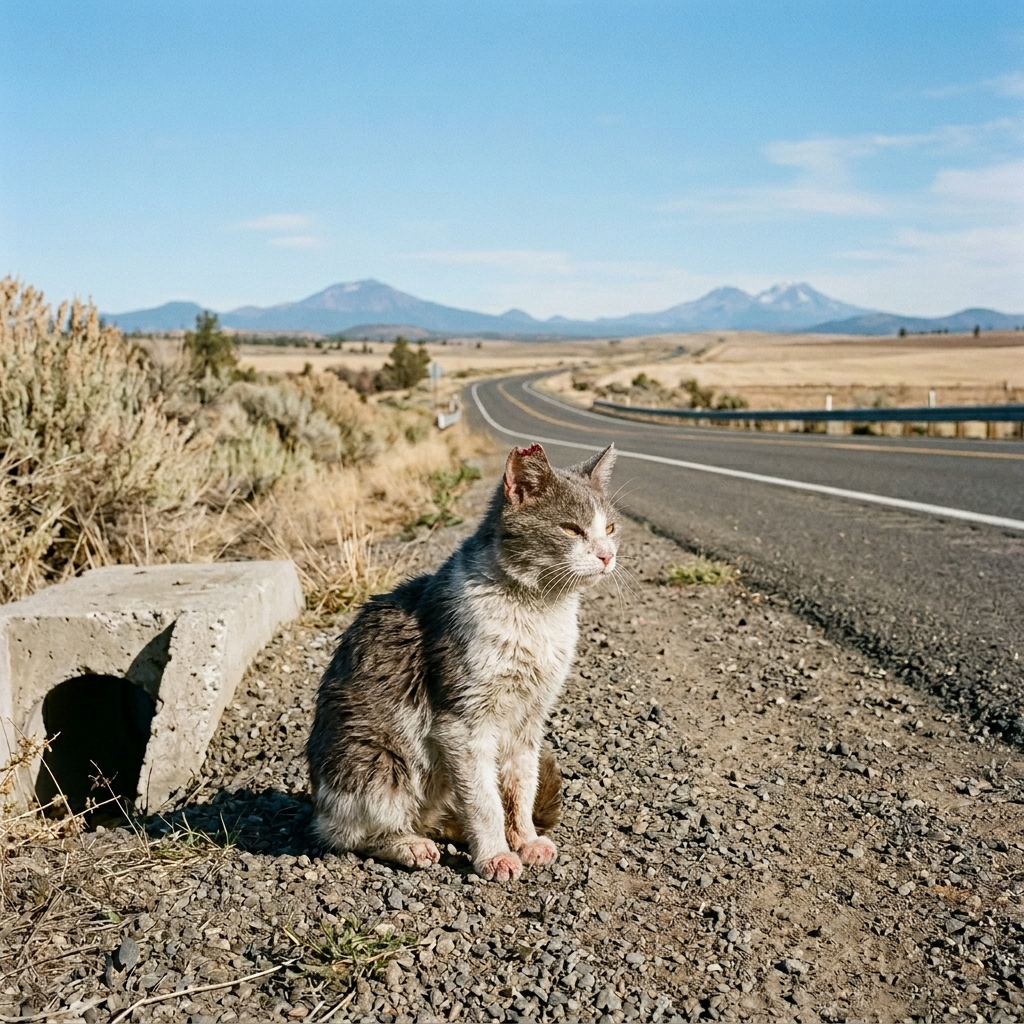
. His rig drifted off the shoulder and came to rest gently against a drainage culvert. He was discovered the next morning by a passing motorist. What no one noticed for almost a full week was the grey and white domestic shorthair cat who had been traveling with him for over three years. The driver’s logbook and phone photos later showed the cat—named Dutch—always close, often perched on the dashboard. When the truck was towed, Dutch slipped out during recovery and vanished into the dry brush along the roadside.
Seven days after the accident, a farmworker spotted a grey and white cat sitting about forty feet from where the truck had been. He wasn’t hunting or wandering. He was simply sitting, facing the highway, watching the road. The farmworker left food, but it sat untouched for two days before Dutch finally ate. Every day after that, for the next forty days, the cat returned to the exact same spot. A woman who lived on a nearby property began documenting him. Each morning he was there in the same position—ears forward, body still, eyes fixed on the road where his person had last been. She tried to approach him eleven times over three weeks. Each time he moved just far enough to stay out of reach, then returned the moment she left.
By day thirty, Dutch’s condition had worsened dramatically. He had lost nearly a third of his body weight. His fur was matted and pulling away in patches along his spine from stress. One ear had a fresh tear, likely from a coyote encounter. His eyes were inflamed from dust and constant wind. Yet he never left that stretch of road. Not once. On day forty-seven, the woman finally gained his trust by laying out a worn flannel shirt that the driver’s family had mailed to her. Dutch walked straight to it, lay down, and stayed for three hours. That evening she gently picked him up. He weighed just under five pounds—far below the healthy nine pounds for his frame.
The veterinarian who examined him was moved by what he saw. Dutch’s paw pads were cracked and raw from sitting on frozen ground. He was severely dehydrated, his gums pale, and one canine tooth was broken, probably from chewing desperately on something hard. Over the following six weeks, Dutch received dedicated care and survived. The driver’s sister adopted him. She said the first night in her home, Dutch climbed onto a windowsill facing the street and sat there until dawn. He repeated this every night for over four months.
Dutch wasn’t feral or confused. He understood exactly what had happened. He had simply decided that the place where he last had his person was the only place worth being. For forty-seven days he waited with no shelter, no certainty, and no one calling his name. He stayed not because he didn’t know how to leave, but because leaving would have made the loss real. In the end, a loyal cat taught everyone who heard his story that love can look like sitting still on cold pavement for weeks, refusing to abandon the last spot where you felt safe and seen. Dutch now lives in a warm home with morning light and a person who comes home to him every day. Yet sometimes he still sits by the window, watching the road with quiet hope, remembering the man who once shared the open highway with him.
Thanks for reading this story
SAY YES IF YOU WANT TO READ THE FULL STORY
Please follow us if you like this story